
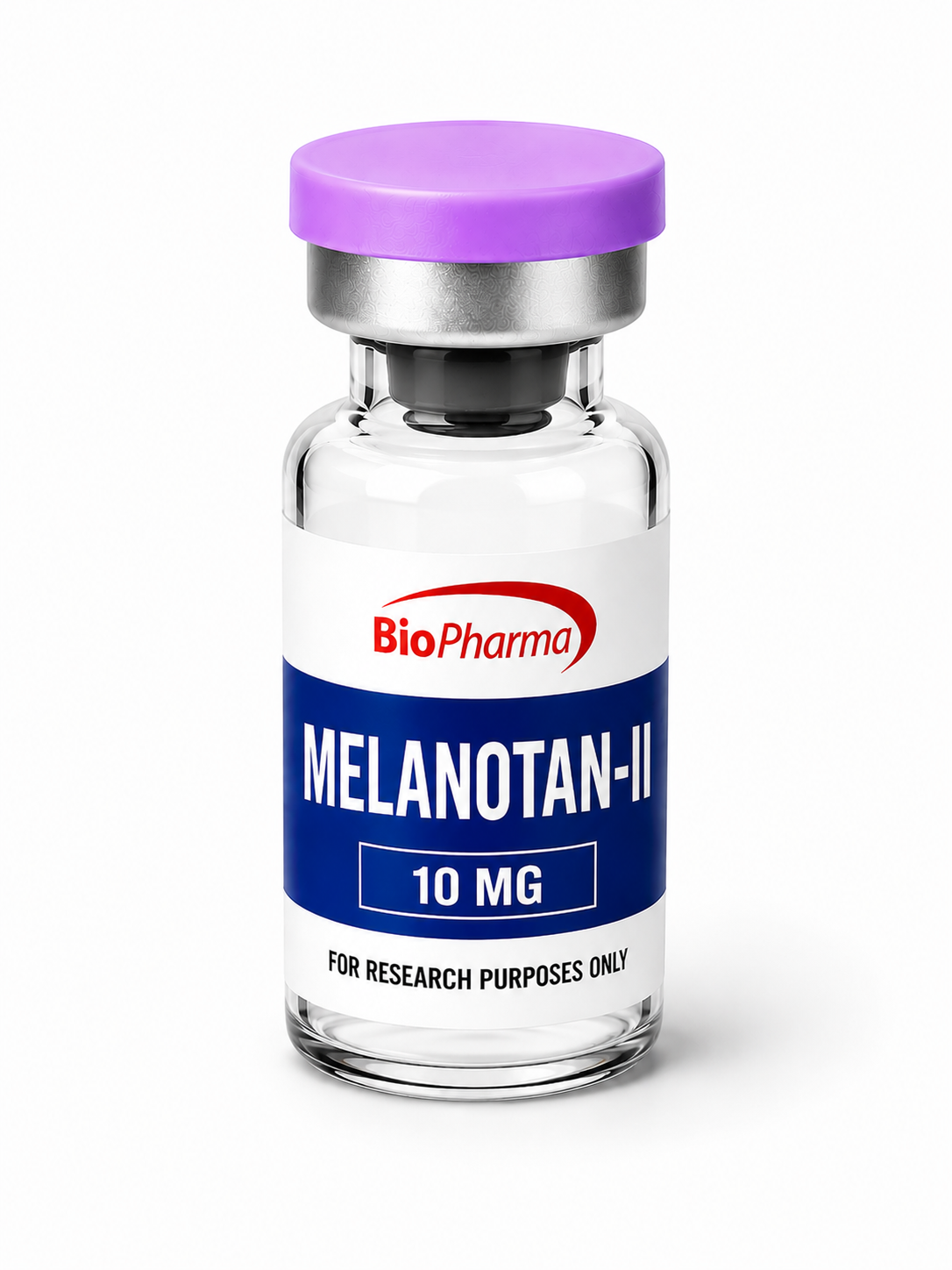
Explore Melanotan-II peptide, also known as Melanotan 2, MT-II, or MT-2 — a synthetic cyclic heptapeptide analog of alpha-melanocyte-stimulating hormone (α-MSH). Developed at the University of Arizona, this potent non-selective melanocortin receptor agonist activates MC1R, MC3R, MC4R, and MC5R. It is widely studied in research settings for its effects on melanogenesis (skin pigmentation), central sexual arousal pathways, and appetite regulation.
Unlike the more selective Melanotan I (afamelanotide/Scenesse, which is FDA-approved only for erythropoietic protoporphyria), Melanotan-II has a broader receptor profile. This accounts for its multi-system research interest — and its wider range of observed effects. Melanotan-II itself has never received FDA, EMA, or other major regulatory approval for any human indication and remains an investigational/research compound.
Key Research Areas of Interest for Melanotan-II Peptide
• Stimulation of eumelanin production via MC1R on melanocytes, supporting studies of sunless or UV-assisted pigmentation.
• Activation of central MC3R/MC4R pathways linked to sexual arousal and erectile responses in preclinical and limited human data.
• MC4R-mediated effects on appetite and energy balance, of interest in metabolic research.
• Foundational role in the development of more selective compounds such as bremelanotide (PT-141 / Vyleesi).
• Broader utility as a pharmacological tool for mapping the melanocortin system.
How Melanotan-II Works
Melanotan-II (MT-2) is a cyclic heptapeptide (Ac-Nle-cyclo[Asp-His-D-Phe-Arg-Trp-Lys]-NH₂ or related sequence) with a molecular weight of approximately 1,024 Da. Its lactam bridge confers greater stability and potency than native α-MSH.
• MC1R activation on melanocytes elevates cAMP, upregulates tyrosinase and related enzymes, and shifts pigment production toward darker eumelanin.
• MC3R and MC4R activation in the hypothalamus and related CNS regions influences sexual motivation, erectile physiology, and satiety signaling.
• MC5R engagement affects certain exocrine functions.
These actions explain the combination of pigmentation, arousal-related, and appetite-suppressing effects observed in research.
Important Considerations
Melanotan-II is not approved for human use as a tanning agent, sexual enhancer, or weight-management product. It is typically supplied for laboratory research only. Quality, purity, and dosing of unregulated products can vary significantly. Any human administration carries risks and should only be considered under qualified medical supervision where legally permitted. Existing moles and freckles may darken; new pigmented lesions have been reported in association with use.
Commonly Reported Effects and Safety Profile
Frequently noted effects in available data and user reports include nausea (often dose-related and most prominent early on), facial flushing, spontaneous erections (with rare reports of priapism), yawning/stretching, reduced appetite, and generalized or localized skin darkening. Darkening of moles and freckles is common. Case reports have linked Melanotan-II use to changes in melanocytic nevi and, in some instances, melanoma diagnoses, as well as rare systemic events. Long-term controlled safety data are lacking.
Critical Disclaimer: Melanotan-II is an unapproved research chemical. It is not intended to diagnose, treat, cure, or prevent any disease. Regulatory agencies in multiple countries have issued warnings against its use as a cosmetic tanning product. Source only from reputable suppliers providing third-party testing when conducting legitimate research. Consult a healthcare professional regarding any potential personal use, and monitor skin regularly for changes.
Advance your melanocortin system research with high-purity Melanotan-II peptide. Review certificates of analysis and prioritize verified materials for reproducible results.
Laurie –
Worked wonderful, got very dark very quickly.